Hood Cleaning Spokane WA | Commercial Kitchen Exhaust Services
Certified restaurant hood vent cleaning throughout the Spokane–Coeur d'Alene area, cleaned to NFPA 96 standards.
Spokane's Trusted Family-Owned Commercial Cleaners Since 2011
Since 2011, CleanCo WA has been serving Spokane and the Coeur d'Alene area, providing professional commercial cleaning services. Our certified technicians, trained to NFPA 96 standards, provide compliant commercial kitchen exhaust system cleaning in Spokane, Spokane Valley, Liberty Lake, Post Falls, and Coeur d'Alene.
We serve Eastern Washington and North Idaho restaurants, hotels, healthcare facilities, schools, and commercial kitchens with professional commercial kitchen exhaust system cleaning and exhaust system maintenance. From downtown Spokane dining areas to downtown Coeur d'Alene dining facilities, we help commercial kitchens stay safe and compliant.
Why Restaurant Owners Need Professional Hood Cleaning Services
Critical business protection and compliance with NFPA 96 guidelines for commercial kitchen operators
Protect Your Restaurant with Professional Hood Cleaning
As a restaurant owner, hotel manager, or food service director in Spokane, your commercial kitchen exhaust system is critical infrastructure requiring professional maintenance. Neglecting hood cleaning services puts your business at serious risk — from devastating fires to costly shutdowns and insurance complications.
Commercial kitchen fires cause over $246 million in property damage annually, with 61% originating in cooking equipment and exhaust systems. Professional hood cleaning is your first line of defense against catastrophic loss, protecting your business, employees, and customers.
Avoid Business Closure
Failed fire inspections can shut down your restaurant immediately. NFPA 96 violations can result in forced closure until compliance is achieved. Professional cleaning helps prevent costly shutdowns.
Lower Insurance Risk and Costs
Insurance carriers consider NFPA 96 compliance when underwriting restaurant policies. Documented professional exhaust system cleaning helps reduce fire risk, supports favorable coverage terms, and can prevent premium increases or coverage restrictions.
Legal Liability Protection
Documented professional cleaning helps reduce exposure to negligence claims if a fire occurs. Compliance with NFPA 96 demonstrates due diligence in maintaining safe commercial kitchen exhaust systems.
Employee Safety and Retention
Clean exhaust systems support healthier kitchen environments by reducing smoke, grease, and airborne contaminants. Improved air quality helps protect staff safety, supports job satisfaction, and can reduce workplace injury risk.
Hidden Costs of Dirty Commercial Kitchen Exhaust Systems
Restaurant owners often underestimate the financial impact of neglecting hood cleaning services. Beyond fire risk, dirty exhaust systems create multiple costly problems:
- Increased Energy Costs — Grease buildup restricts airflow, forcing exhaust fans and HVAC systems to run longer and work harder
- Equipment Failure — Grease accumulation on fans and motors accelerates wear and increases the risk of premature failure and replacement
- Fire and Code Violations — Fire code violations can result in citations, reinspection fees, and required shutdowns until corrected in Washington
- Insurance Claim Denials — Insurers may deny or limit fire claims if NFPA 96 maintenance records are missing or incomplete
- Lost Revenue — Temporary shutdowns for fire code violations or post-fire investigations can result in significant daily revenue loss
Why Spokane Restaurants Choose CleanCo WA for Hood Cleaning
Critical fire safety and Washington State compliance benefits
Spokane County Restaurant Fire Safety and Hood Cleaning Requirements
Washington fire codes require commercial kitchens to maintain NFPA 96-compliant exhaust systems. In Spokane County, fire marshals conduct regular inspections and require documented professional commercial kitchen exhaust system cleaning. Violations can result in citations, fines, and temporary closure until compliance is achieved.
When Restaurant Owners Should Schedule Hood Vent Cleaning
All restaurants must follow a regular hood vent cleaning schedule based on cooking type and volume. Under NFPA 96, commercial kitchen exhaust systems must be inspected and cleaned monthly to annually, depending on usage. Proactive restaurant operators schedule hood vent cleaning on a set interval, not just when problems appear.
Warning signs that require immediate professional service include:
- Excessive Smoke in the Kitchen — Poor ventilation often indicates a restricted exhaust system
- Grease Dripping from the Hood — Visible grease buildup requires immediate cleaning to reduce fire risk
- Unusual or Persistent Cooking Odors — Lingering odors can signal inadequate exhaust system performance
- Higher Utility Bills — Restricted airflow can cause exhaust fans and HVAC systems to run longer and work harder
- Upcoming Fire Inspections — Schedule cleaning well before fire marshal inspections to maintain NFPA 96 compliance
NFPA 96 Certified Hood Cleaning Process
5-step commercial kitchen exhaust system cleaning following Washington State standards
System Inspection
Complete inspection of the hood, exhaust ductwork, exhaust fan, and rooftop components, with documentation prepared for fire marshal review.
Hood Cleaning
Disassembly and cleaning of hood surfaces, grease filters, grease traps, and exhaust plenum to remove grease buildup.
Duct Cleaning
Thorough cleaning of the entire exhaust duct system using specialized tools and food-safe degreasers approved for commercial kitchen environments.
Exhaust Fan Cleaning
Cleaning of exhaust fan blades, housing, and components to restore airflow and support reliable operation in the Pacific Northwest climate.
Certification and Documentation
Final inspection with before and after photos, certificate of completion, and a recommended service schedule for local fire code compliance.
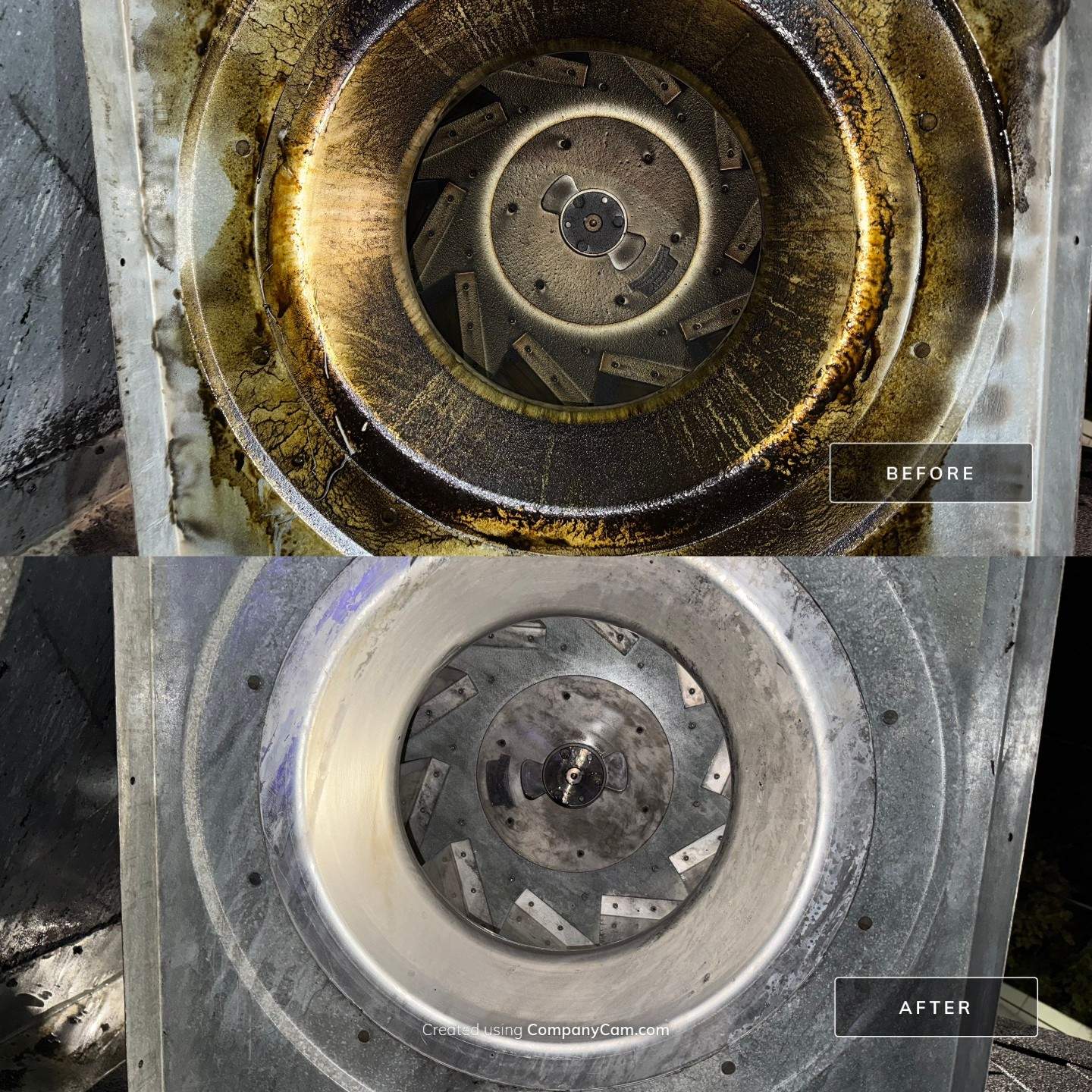
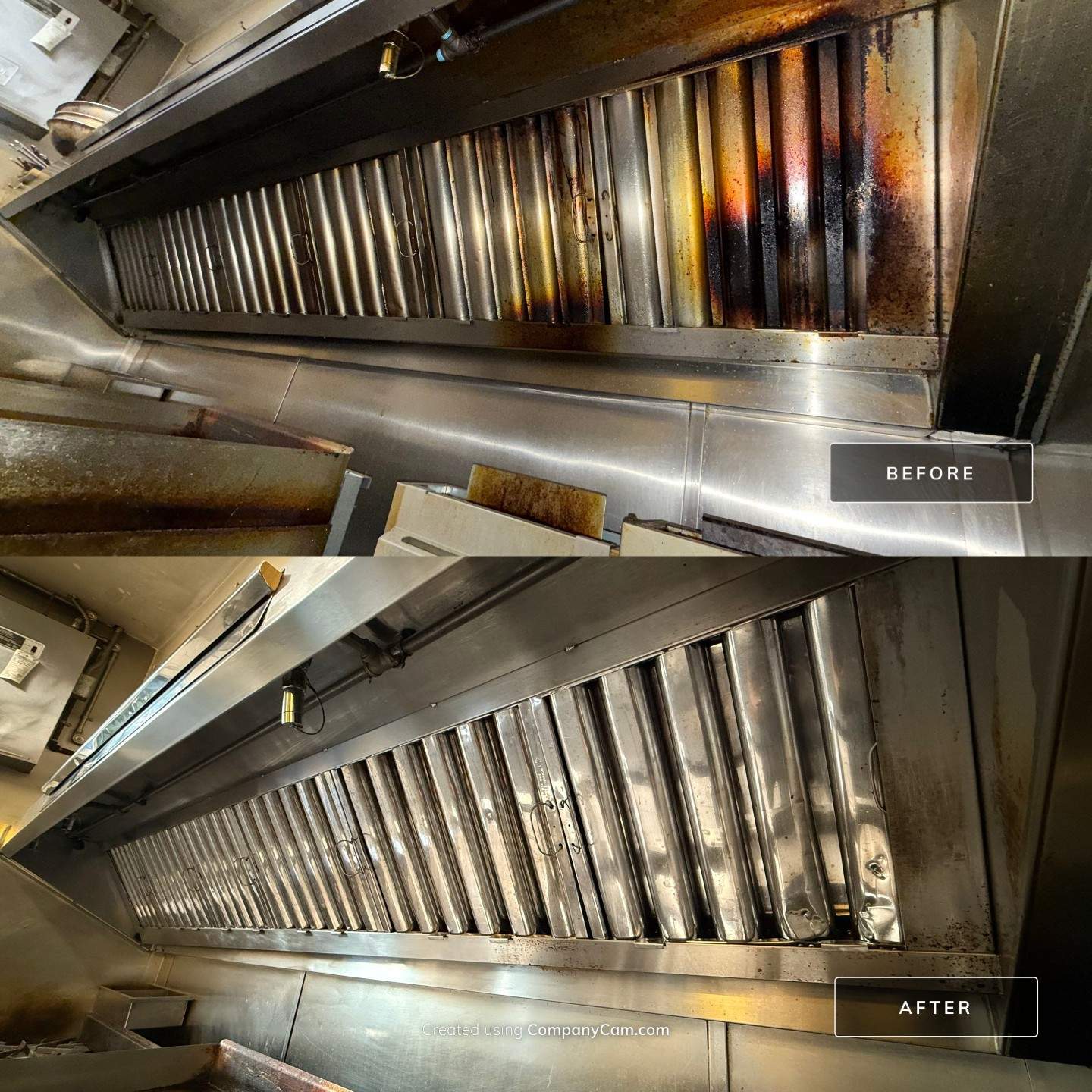
Professional Results for Even the Toughest Hood Vents
Our certified technicians have the expertise and equipment to tackle even the most heavily soiled commercial kitchen exhaust systems in the Spokane and Coeur d'Alene area.
Our Professional Cleaning Process
- Heavy-Duty Degreasing: Food-safe, industrial-grade degreasers break down heavy grease and carbon buildup throughout the exhaust system.
- Hand Scraping and Pressure Washing: Manual scraping combined with high-pressure hot water removes stubborn deposits from all accessible surfaces.
- Complete System Access: Hood components are disassembled to access concealed areas where grease accumulates and creates fire risk. Where required, we install fire-rated access panels in accordance with NFPA 96 guidelines to allow full access to the entire exhaust system.
- Bare Metal Standards: Where achievable, we clean all required and accessible exhaust system components to bare metal in accordance with NFPA 96 guidelines for fire code compliance.
Frequently Asked Questions About Hood Cleaning
Common questions from Spokane restaurant owners about commercial kitchen exhaust cleaning
Q How Often Should Restaurants Schedule Hood Cleaning Service?
Hood cleaning frequency depends on cooking volume and cooking type. Under NFPA 96, commercial kitchen exhaust systems must be inspected and cleaned at required intervals based on use.
- High-volume cooking with heavy frying or solid fuel typically requires monthly cleaning
- Moderate-volume operations generally require quarterly cleaning
- Low-volume kitchens often require semi-annual cleaning
- Minimal-use operations may qualify for annual cleaning
Fire codes in Washington adopt NFPA 96 and require restaurants to follow these schedules based on their specific operation. Regular cleaning is required as long as your kitchen is operating, not only when issues are visible.
Q How Much Does Commercial Hood Cleaning Cost?
Commercial hood cleaning costs vary based on system size, layout, accessibility, and required cleaning frequency. Every commercial kitchen exhaust system is different, which makes accurate pricing impossible without an on-site review.
We provide free inspections and written bids so pricing is based on your actual system, cooking volume, and fire code requirements. This approach ensures you pay only for the level of service your kitchen requires and stay compliant with NFPA 96.
Q What Is NFPA 96 and Why Does It Matter?
NFPA 96 is the National Fire Protection Association standard that governs commercial cooking operations and kitchen exhaust fire safety. Washington fire code requires commercial kitchens to comply with NFPA 96.
The standard defines required cleaning frequencies, approved cleaning methods, and documentation requirements for commercial kitchen exhaust systems. Following NFPA 96 helps reduce fire risk, supports code compliance, and limits exposure to fines, shutdowns, and liability.
Q Can Restaurant Staff Clean Hoods Themselves?
Restaurant staff can clean visible and accessible hood surfaces, but full commercial kitchen exhaust system cleaning requires professional service. Exhaust ductwork, exhaust fans, and rooftop components require specialized equipment, training, and safe access methods.
Fire marshals enforcing Washington fire code require documented professional cleaning to meet NFPA 96 standards. In-house or DIY cleaning does not satisfy NFPA 96 requirements and may not meet insurance or inspection documentation standards.
Q How Long Does Professional Hood Cleaning Take?
Most professional hood cleaning services take 3 to 6 hours, depending on system size, layout, and accessibility. Service is typically scheduled during off-hours to reduce disruption to restaurant operations.
- Small systems may take 3 to 4 hours
- Larger commercial kitchens with extended ductwork can require 6 to 8 hours
Cleaning time varies by system condition and required cleaning level, but all work follows NFPA 96-compliant procedures to meet fire code requirements.
Q What Areas Are Included in Hood Cleaning Service?
Complete hood cleaning includes all required components of the commercial kitchen exhaust system, from the hood to the rooftop. Service typically includes:
- Hood interior and exterior surfaces
- Baffle filters and filter racks
- Exhaust plenum and grease traps
- Exhaust ductwork
- Exhaust fan, housing, and rooftop components
Where achievable, required and accessible areas are cleaned to bare metal standards in accordance with NFPA 96 guidelines. Service includes before and after photos and written documentation for fire code compliance.
Hood Cleaning ROI: Cost Savings for Smart Business Owners
Professional hood cleaning delivers measurable cost savings by reducing risk, preventing shutdowns, and lowering long-term operating expenses.
Calculate Your Hood Cleaning Return on Investment
Smart restaurant owners treat professional hood cleaning as an investment, not an expense. Regular commercial kitchen exhaust system maintenance helps control operating costs, reduce fire risk, and avoid losses that can far exceed the cost of scheduled service.
Energy Savings Analysis
Clean exhaust systems improve airflow efficiency and help reduce unnecessary energy use. When grease buildup restricts airflow, exhaust fans and HVAC systems run longer and work harder. Routine cleaning supports more efficient operation and helps control long-term utility costs.
Equipment Longevity
Routine professional maintenance helps extend the service life of exhaust fans and related components. Removing grease buildup reduces mechanical strain, lowers the risk of premature failure, and helps delay costly repairs or replacements.
Insurance Risk and Cost Control
Insurance carriers consider NFPA 96 compliance when underwriting restaurant policies. Documented professional exhaust system cleaning helps reduce fire risk, supports favorable coverage terms, and can prevent premium increases or coverage restrictions.
Avoided Violations
Professional commercial kitchen exhaust system cleaning helps prevent fire code violations related to grease buildup and incomplete maintenance. Citations, reinspection fees, and temporary closures can quickly exceed the cost of routine professional cleaning.
How Professional Documentation Benefits Your Restaurant Business
Proper documentation serves critical compliance, insurance, and liability purposes beyond simply showing clean equipment.
Detailed before and after photographs serve multiple critical business purposes. Restaurant owners use our comprehensive photo documentation to satisfy regulatory requirements, support insurance coverage, and demonstrate professional maintenance standards.
Insurance Protection
Photo documentation helps demonstrate proper maintenance if a fire claim arises. Insurers often require evidence of professional exhaust system cleaning to support coverage review and reduce claim disputes.
Fire Code Compliance
Photo documentation supports fire marshal inspections by providing clear evidence of professional exhaust system maintenance. Visual records help streamline inspections and reduce follow-up requirements during fire code reviews.
Legal Liability Defense
Before and after photos help demonstrate due diligence in maintaining safe commercial kitchen operations and can support defense against negligence claims.
Operational Transparency
Photo documentation provides clear visibility into exhaust system condition and maintenance history.
Schedule a Free Estimate and Inspection Today
Our certified technicians are ready to help keep your commercial kitchen safe and compliant.
Click Here to Call Us NowOffice hours Monday through Friday, 8 a.m. to 5 p.m. We check messages over the weekend. Serving the Spokane and Coeur d'Alene areas.